

Unique architecture

Ancient history

Archaeological finds
The fascinating Thracian tombs
Bulgaria features a vast plethora of Thracian tombs and sanctuaries. They yield lots of information about the ancient culture of Thracians who inhabited these lands. These sites have remained in good condition because almost all of them were buried in hills. The total number of Thracian time hills on Bulgarian territory is over 60,000, but just around 1,000 of them have been researched.
Some 5000 years ago the ancient Thracians inhabiting the territory of the present-day Bulgarian lands began to grow vines and make wine. They brought the first vines from the Middle East in what is now known as South Bulgaria and were the first ones on the Balkan Peninsula to create wine out of the grapes. They used the wine not only as a drink on the table, but also in many of their religious rituals. Through the wine they were reaching their gods. The Thracians were considered as some of the finest winemakers in the Antique world. In his works Homer often mentioned the superior qualities of the Thracian wines. According to him the most famous wine with the richest aroma and full body was from Thracia. In 1966 Bulgaria was the 6-th largest exporter of wine in the world. Nowadays Bulgaria produces some of the finest wines in the world and is a main exporting country on the global wine market. Local Bulgarian sorts of wines as Mavrud, Melnik, Gamza, Dimiat, Rubin and more are famous around the world and have won many international awards.
The Kazanlak tomb
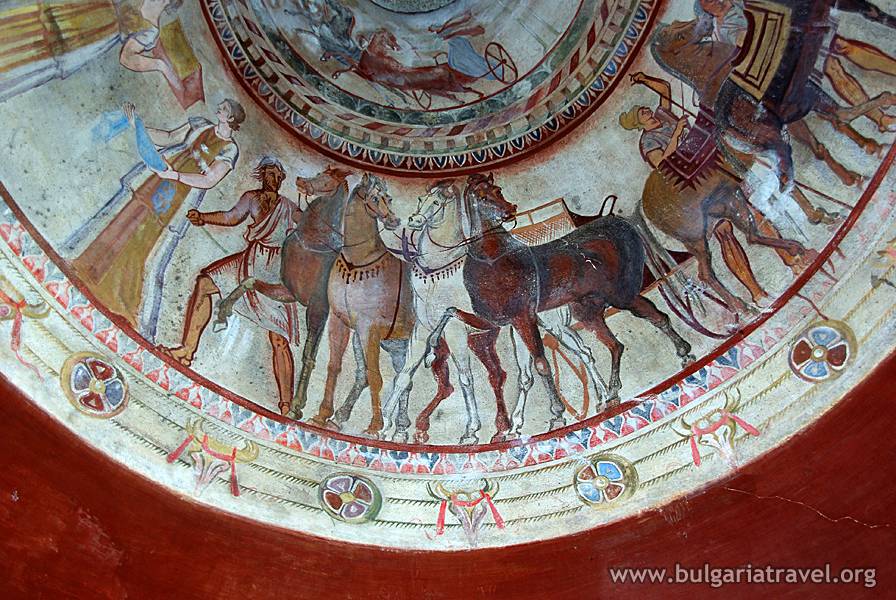
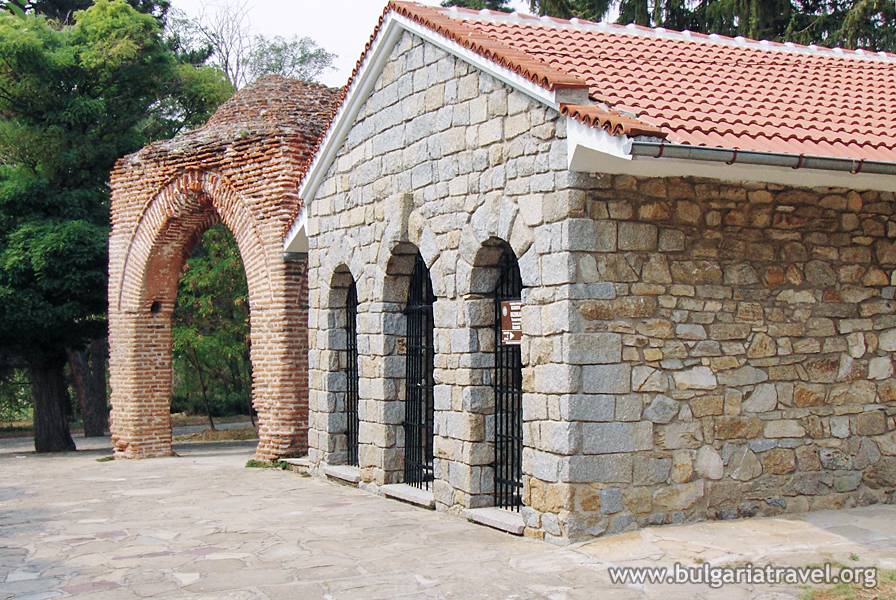
An original Thracian tomb from 4th – 3rd century BC is situated in the Tyulbeto park. It is known as the Kazanlak Tomb. It is a significant monument of the Thracian art from the early Hellenistic age. Based on its architectural outlook, it belongs to the dome tombs, typical for the Thracian funeral architecture from the end of the 5th and the beginning of the 3rd century BC.
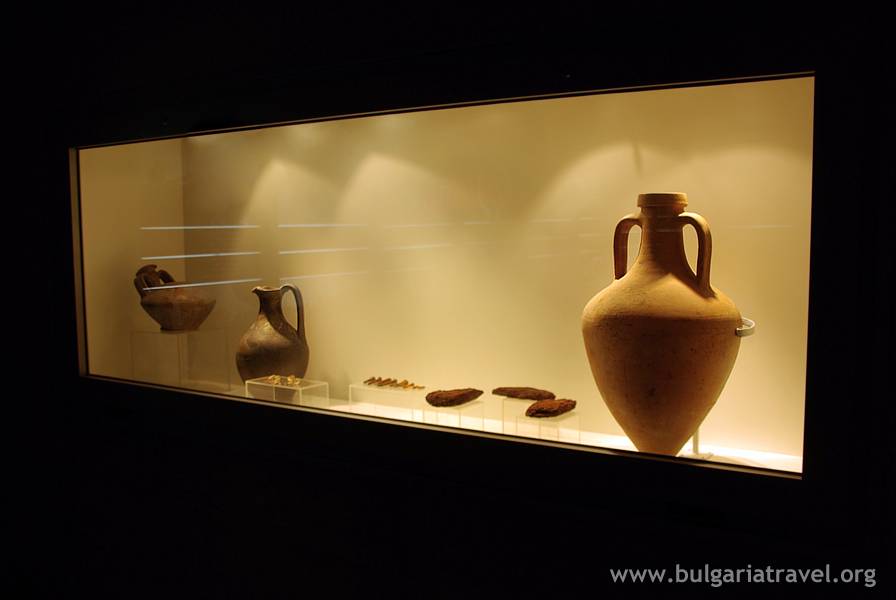
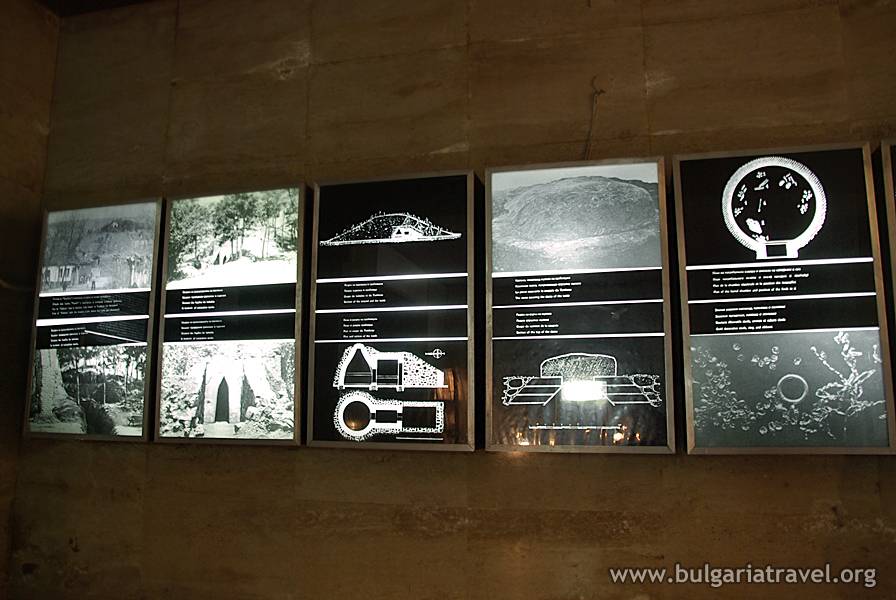
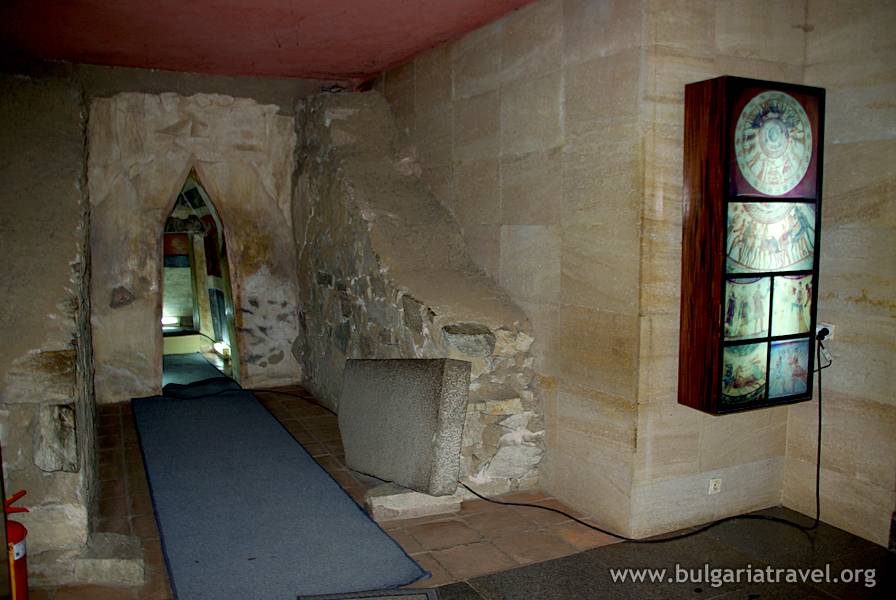
Kazanlak tomb is situated in the south part of a sepulchral mound and consists of three premises: a rectangular anteroom, a narrow brick corridor (dromos) and a brick sepulchral chamber with a round plan and a bell-shaped dome. Two burials had been conducted in the sepulchre – of a man and of a woman, by means of corpse lying, which is evident from the preserved bones. According to the archaeologists, the tomb was robbed as early as in antiquity. Two clay askoses (flat round vessel with two handles) and a silver jug were found in the mound. A clay vessel – oynohoe (wine jug) and horse bones were found in the anteroom. A sharp-bottomed amphora, clay rosette with dry gilding, a funeral crown, small parts of golden jewels and pieces of local Thracian ceramics were found in the dome premise. The monument owes its global fame to the remarkable wall-paintings in the corridor and the dome premise – one of the best preserved products of the antique painting from the early Hellenistic age. The unknown painter had worked in four basic colors: black, red, yellow and white.
The wall decoration imitates in colors the front wall of a rich construction, coated in marble tiles and ending in architectural details. The warriors presented on the second frieze in the corridor represent a meeting between two enemy troops, and a fight scene is presented on the west wall. The scenes represent a historical event related to the life of the distinguished Thracian ruler buried in the tomb.
Figures of a man and a woman who are sitting by a small table covered in fruits are painted opposite to the entrance, in the dome premise in the center of the main frieze, and around them are presented their servants who are bringing gifts. A scene of a funeral feast with a procession is pictured. The distinguished married couple is crowned with laurel wreaths – a sign of heroisation which was widely popular during the Hellenistic age. Some say the woman portrayed is actually the Great Goddess, and that is her wedding to a man. Others believe the painting shows King Roygos and his wife. The wall decoration in the upper area of the dome ends with a second small frieze, which pictures three chariots pulled by two horses.

The Tomb of Seuthes III in Mound “Golyamata Kosmatka”
The Golyama Kosmatka hill, also in the Valley of Thracian Kings, is another large tomb with a corridor and three chambers. It is supposed the famed Thracian ruler Sevt III was buried there. A rich store of arms and women’s decorations were found there, including a gold burial wreath. In front of the corridor there was a sacrificing pit, where a bronze head of a statue was found. These artifacts, plus artifacts found in other tombs, testify Thracians were skilled builders, artisans, potters, etc. They must have added their significant contribution, to enable the development of civilization.
At the beginning of the III century BC in the central chamber a ritual burial of a Thracian aristocrat was performed, and in the first chamber – a horse sacrifice. So the building has changed its function, becoming a tomb.
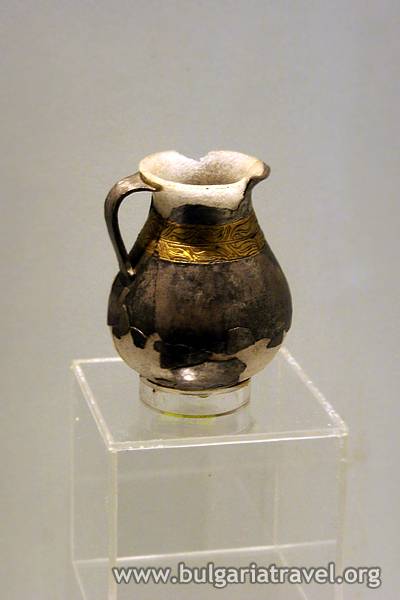
The inventory is extremely valuable, depicting personal and burial gifts – a golden crown, a golden cup / kylikes /, a set of gold ornaments for horse trappings , arms – gold-plated iron sword with sheath, bronze greaves, spear gads, parts of a shield, vessels of bronze and alabaster. Particularly fascinating are the following three objects – a bronze helmet, a silver jug and a silver cup, where the name of ΣΕΥΘΟΥ / Seuthes / can be deciphered.
After the funeral ceremony, the entrances to the chambers were built in, and adjoined to the facade – a 13 – meter passage was constructed with stone walls and a wooden roof. In sealing off the installation, it was burned down and filled up with the sliding mound-bar. 7 m south of the entrance there is a head of a bronze statue – an exquisite masterpiece of the Hellenic sculpture.
Having found four bronze coins of Seuthes III in the beginning of the passage, the exclusive resemblance of the features of the bronze head to the coin images of this Thracian ruler, and the three inscribed funeral items bearing his name, assume that this is the tomb of the founder of the Thracian town of Seuthopolis and Odrysian ruler – Seuthes III.
The Ostrusha tomb
Another Thracian tomb with frescoes is the Ostrusha tomb, a few kilometres south-east of Shipka town. Due to ancient and modern tomb raiders, there is only a fresco of a woman left preserved. The tomb is from the 4th century BC and is hewn of a monolith, with another monolith on top as a roof. The central chamber is carved into a single granite block weighing about 60 tons. It is covered with murals, and some of the detail is gold leaf. Best preserved is a small image of a woman’s head with long brown hair who is wearing golden earrings and a golden necklace. The skillfully executed image is done in the regular proportions consonant with realistic Thracian portraiture of the mid-4th century BCE.After the ritual oblations were made to the ruler, this sanctuary was covered and so became a burial site.
Thracian Temple Complex, Starosel
The Thracian Temple Complex in the Chetinyovata Mogila, at a distance of 4km from the village of Starosel. This is the oldest ever found royal Thracian complex with a mausoleum. It dates back to the end of 5th and the beginning of 4th century BC.
The staircase leads the visitors to a flat platform, used for ritual dances. A corridor leads to the real façade of the temple and the round hall containing 10 decorative semi-columns and tryglyphs (rectangular plate above each column) with blue and red decoration. Religious ceremonies, related to the cult to the Mother Goddess, her son the Sun and Orpheus were performed in the temple.
On the north side of the temple is dug an elliptical rock bath for production and storage of wine. When excavations were found inside vessels for wine drinking and strainers.
30 m. south of the domed building, was found a “cenotaph” – an empty grave, and around it in three separate tanks – remnants of the human body and lot of gifts – gold ring craft, horse ammunition, weapons.
At the foot of the Chetinyova mound complex is located а tomb (called “Mound Horizon”). This is the only discovered Thracian heroon which has columns (10). The columns have capitals in early Doric style. In this tomb was buried representative of the Thracian aristocracy, as evidenced by discovered gold and silver objects.
The Sveshtari tomb
The Thracian Tomb of Sveshtari is one of the biggest discoveries in the last 30 years in Bulgaria, located in Northeastern Bulgaria, Razgrad district.Attracting many tourists from all parts of Bulgaria, the tomb has already gained popularity at the international level thanks to its presence on the UNESCO World Heritage List. It was built in the first quarter of the 3rd century BC and is a unique monument of Thracian cemetery architecture. It has impressive dimensions – its length is 7.5 m, the width is 6.5 m and the height of the chamber is 4.45 m.
The tomb is made of large limestone blocks. It consists of a corridor and three chamber rooms, each chamber is covered with a separate vault. The tomb has a unique architectural decor, with polychrome half-human, half-plant caryatids and painted murals. The decoration of the tomb is in the spirit of the Hellenistic culture but one can see also the Getae’s views and beliefs. Very unconventional, the beautiful decoration attracts the attention of tourists as soon as they enter.
The body of the dead ruler was laid in the chamber. The unfinished decoration on the walls and the ceiling show that he died before his eternal home was finished. The ceiling of the camera is supported by statues of women with raised hands called caryatids, whose faces and hair still carry the remains of a colorful decoration. An interesting fact is that each of them has a different face. In addition, there is a fresco in the tomb representing the religious procession and the ordination of heroization – the ruler, who receives a golden wreath from the hands of a goddess dressed in a long robe.


The Shushmanets tomb
East of Shipka is the Shoushmanets tomb, an astonishing representation of the Thracian architecture. The temple has a long and wide entry corridor and an antechamber, a semi-cylindrical room supported by an elegant column. The top of this column has the form of a knucklebone. Four horses and two dogs were sacrificed in the antechamber. The central room is circular in shape, supported by a beautiful polished Doric column
The Svetitsata tomb
Despite many of the tombs having been robbed long ago, in August 2004, Dr Kitov made another discovery. At the Svetitsata mould, east of Shipka, his team found a grave with expensive imported vessels, weaponry as well as a golden mask of a bearded man, weighing 673 grams. After an analysis of the skeleton buried in the grave, Dr Kitov announced it is of the Thracian king Teres.
The Mezek tomb
The Thracian tomb by Mezek village was revealed in 1931 and is considered to be one of the most significant findings in ancient Thrace. Built in IV c. B.C., it is considered the biggest and best preserved tomb from this period. The imposing architecture of the tomb is constructed entirely without mortar – the big stone blocks are connected with each other by iron and oak brackets. The upper part of the tomb is covered by a 15-metre high mound. Its total length is approximately 30 m, the corridor is 21 m long, 1.6 m wide and 2,4-2,6 high. From the corridor you pass into rectangular atria one after another and after them in a round burial chamber with hive-shaped dome, stone sarcophagus and two stone troughs (urns). A number of objects of gold, silver, bronze, iron, glass, tiles and clay dating back to IV-III century B. C. bespeak this.
It is thought that the tomb was used as a temple of a heroon – a place where the cult of the godly diseased person had been celebrated by specific religious rituals. It had been used multiple times and most probably it had served as a family tomb of a Thracian aristocrat. Traces of six funerals were found. A woman had been buried in the anteroom.
The tomb itself is a magnificent architectural work.
The Aleksandrovo tomb
The Aleksandrovo tomb is a Thracian burial mound and tomb excavated near Aleksandrovo, Haskovo Province, South-Eastern Bulgaria. It is dated back to 4th century BCE. It is thought that the tomb had two periods of use, since there are two floor levels in the circular chamber – one made of stone blocks and the other of tamped-down clay.
The Aleksandrovo Tomb is one of the largest complexes of its type, and its unique frescoes on a variety of subjects cover the whole tomb, from the corridors to both burial chambers.The most complex of the frescoes are in the circular chamber. They are arranged in six horizontal strips of different heights, on on top of the other. Most of the images depict hunting scenes.
The fresco in the main chamber depicts a hunting scene where a boar is attacked by a mounted hunter and a naked man wielding a double-axe. The double-axe is interpreted as representing royal power, the naked man as representing Zalmoxis, the Thracian solar god corresponding to Zeus.
The Thracian Tomb at Karanovo
The archaeological complex entitled “The Eastern Mound – Chariot and Tomb of a Thracian Aristocrat from 1st Century AD” is located near the town of Nova Zagora.
The team of archeologists found one of the most interesting and important objects at the entire site – a vaulted brick tomb and burial chamber (with dimensions of 3 by 4 meters). The person buried there was obviously very wealthy – two silver chalices were found, both inscribed with the image of the god Eros, along with unique glass plates, warrior’s accoutrements, coins, silver anklets, and gold rings. It is thought that the grave belonged to a Thracian nobleman who was buried there during the 1st century CE. A four-wheel warrior’s chariot was also found, along with the remains of two horses and two dogs. The chariot wheels are exceptionally large, with a diameter of 1.20 meters. The chariot is composed of hide, wood, and bronze, and the bronze decorations on the body of the chariot are particularly noteworthy. Even more richly worked are the horses’ bits and harnesses.
The Antique Beehive Tomb – town of Pomorie
The antique beehive tomb in the town of Pomorie is situated to the west from Pomorie, close to the road for Burgas. The tomb dates back to the 2nd – 3rd century AD. It is believed that it had served as a heroon (a mausoleum) of a rich Anhialo family, in which religious pagan rituals had been performed.
The tomb is the only one of its kind on the Bulgarian Peninsula. Its architecture and construction impress visitors even nowadays due to its perfect implementation. Many architects from the entire world study the tomb in order to find the secret of its mushroom-shaped dome.
More to see nearby
The exhibition "Rose Museum"
Rose culture in Bulgaria, aimed at extracting rose oil is not only the oldest and most attractive industry in our country, but also very exclusive and specific to the region. The main purpose of the museum is to acquaint the people who visit it with the history of growing oil rose and rose production on the Bulgarian lands.
Lion fountain
There is a legend that if you want to go back to Rome, you have to toss a coin into the Trevi Fountain. If you want to stay in Kazanlak forever, you have to drink water from the Lion’s Fountain.
Contact us
Why us?
Private Groups & Tailor-made Tours
Attention to detail
Perfect planning and organization
We put in an extra effort to help you feel the spirit of Bulgaria!
Enjoy more of Bulgaria's sights
CONFITO offers you a tailor-made trip to all the sights you are interested in!
We guarantee you a memorable stay in Bulgaria!
+359886-701-858
info@confi.to